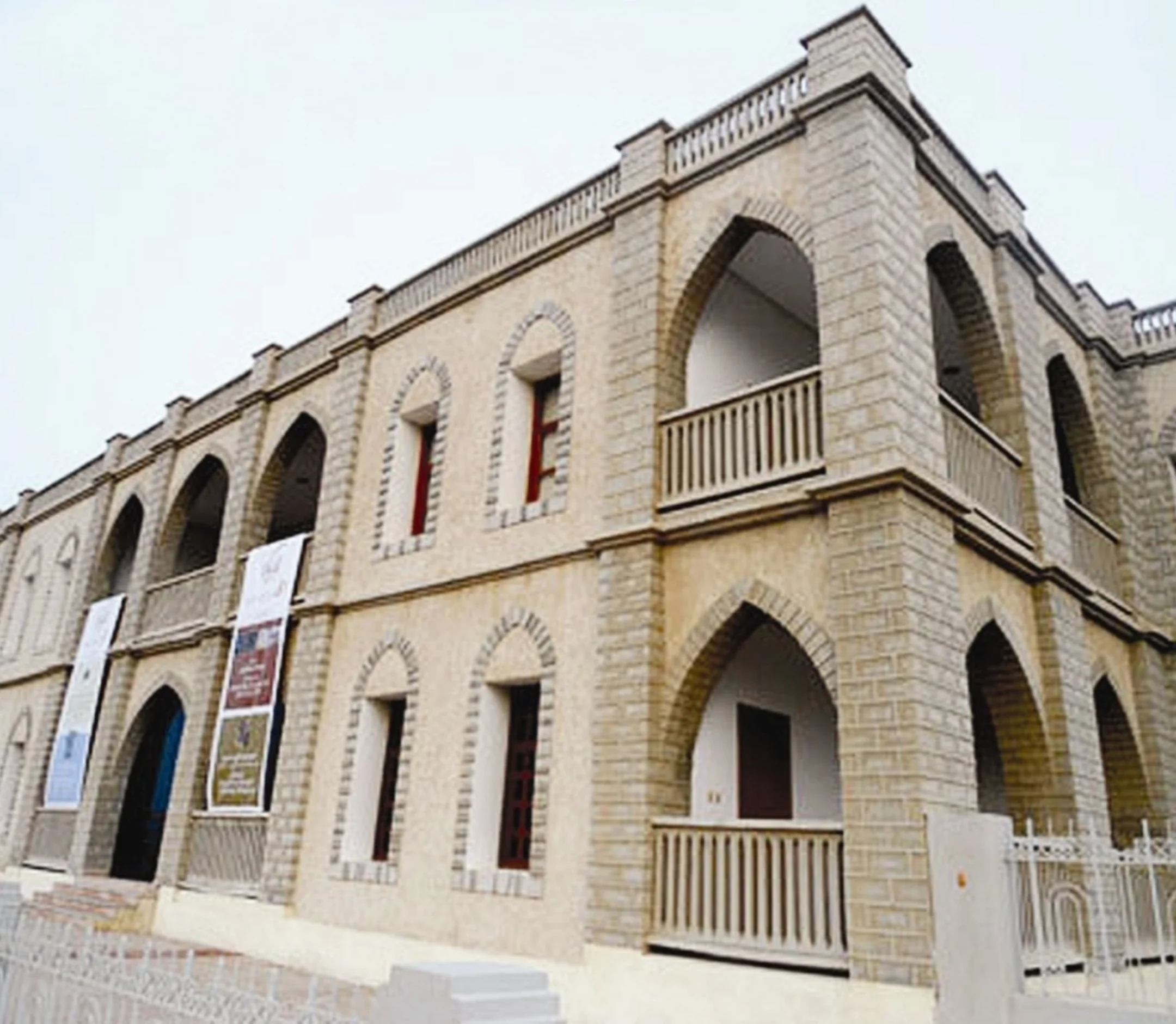
Kuwait's plan to turn historic and heritage buildings into economic and investment opportunities is growing. The upcoming list covers 7 historic sites and buildings to be developed for hotel, cultural and crafts projects while keeping their heritage identity. The aim is to raise their economic returns, revive Kuwait City's centre, attract private-sector investment and support the creative economy.
The Kuwait Authority for Partnership Projects had already tendered a project to prepare and develop the educational infrastructure for the creative economy for the National Council for Culture, Arts and Letters, in line with the creative economy strategic roadmap. That project covers 3 sites: Mishref Palace, the Old Chest Hospital and Al-Mubarakiya School. The National Council is now studying, with the Public Authority for Industry and the Ministry of Finance, adding 4 more sites to the plan: Fahd Al-Salem Palace, the Awqaf Complex, the Palace of Justice and Souq Al-Safafeer. There is also a proposal to revive the Qibla cultural district, reuse its unused spaces and sites, and link them into one integrated urban experience.
The government bodies involved want to put these buildings and sites to investment, hotel, cultural and crafts use, preserving their historic value and earning more from them instead of only paying for their upkeep and restoration.
The National Council has submitted its plan to the Public Authority for Industry to use Souq Al-Safafeer to help revive the city centre, attract private investment and support the creative economy. It has also presented investment models for reusing other heritage buildings and sites.
Under the proposals, Al-Mubarakiya School would be linked to the inner souq and used for design, architecture and urban planning activities. Turning Fahd Al-Salem Palace, opposite Al-Amiri Hospital, into a boutique hotel or entertainment destination is being studied, depending on the site analysis and feasibility study. The plan proposes turning the Palace of Justice into a historic and cultural hotel that hosts events, and developing Souq Al-Safafeer from traditional shops into a hub for crafts and creative manufacturing.
For the Qibla cultural district, the proposal would revive the urban fabric of the area between Al-Qibliya School, the National Museum and the National Library, and connect it to Al-Mubarakiya School and the inner souq. The proposals also call for rethinking how the Awqaf Complex is used, given high capital costs and the difficulty of reaching high occupancy rates in Kuwait City. The idea is to find a model that brings the asset back into the urban fabric and gives it a more integrated cultural and economic role.
The plan also covers public libraries, which number 56 sites. Their services and programmes could be developed so they become spaces for learning, research, design and innovation, and host events, exhibitions, workshops and professional programmes with cultural institutions and the private sector. Funding sources would be diversified and operations made more efficient, while the libraries keep their core role of giving the public access to knowledge.
The projects are still at the stage of concepts, feasibility studies and professional cooperation with the private sector. No estimates have been announced for the investment needed, the expected returns or the timelines.
Alongside the plan, work is under way with the Ministry of Finance, the Civil Service Commission and the Fatwa and Legislation Department on a draft decree-law on creative industries. It aims to give more flexibility in dealing with cultural products and to help the National Council build partnerships with the private sector and attract creative talent. It would also set rules for cooperation with investors and define funding, operating and risk-management models.
United Real Estate operating profit rises 9.35% to KWD 19.6 million
United Real Estate wins right to develop and run Souk Sharq for 15 years
Mabanee: Aventura Mall in Jaber Al-Ahmad City to open by mid-November