

Kuwait's Administrative Court issued first-instance judgments during September and October 2026 annulling Article 15 of the Regulation governing electronic platforms and applications involved in displaying, ordering and delivering products to consumers, in cases brought by companies operating in the electronic platform sector, according to The Times Kuwait, citing a legal study by lawyer Abdulmohsen Yaqoub AlSanea of Dr. Yaqoub Al Sanea & Partners Law Firm and Legal Consultancy.
On July 8, 2026, the Minister of Commerce and Industry issued Ministerial Resolution No. 109 of 2026 regulating electronic platforms and applications acting as intermediaries between consumers and businesses. It replaced Ministerial Resolution No. 10 of 2026, which had regulated the delivery of restaurant orders and prepared food. The resolution included maximum commission rates and delivery fees, contractual obligations between platforms and participating restaurants and stores, and mechanisms for handling complaints and violations.
Article 15 established a graduated system of administrative sanctions: warnings, administrative closure, suspension of business activities, temporary blocking of electronic platforms and, in serious or repeated cases, cancellation of licences and permanent blocking.
The dispute centred on whether the minister had sufficient legislative authority to introduce such measures through a ministerial resolution, reflecting the distinction between the power to regulate commercial activity and the power to impose sanctions. Under the principle of legality, a ministerial resolution may set rules to implement an existing law but cannot create punitive powers the legislature has not authorised, particularly where sanctions involve closing businesses, suspending operations or cancelling licences.
The study notes that Decree-Law No. 10 of 1979, as amended, on the supervision of trade in goods, services and craft activities and the pricing of some of them, already contains provisions on violations, penalties and temporary administrative closure, including Articles 13 and 15 and Article 12 bis, so the administration must act within that framework rather than create a parallel system of sanctions. Graduated sanctions are not lawful by that fact alone; proportionality cannot replace explicit legislative authorisation.
The annulment of Article 15 does not automatically invalidate the other provisions of Resolution No. 109 of 2026. Provisions on maximum commission rates, delivery fees, contractual relationships and other obligations remain in place unless covered by the judgments, though their legality can still be challenged if they exceed the Ministry's statutory authority.
Violations by delivery platforms can still be addressed under other legislation where its requirements are met, including Law No. 72 of 2020 on the Protection of Competition, covering anti-competitive agreements and abuse of a dominant position, and Law No. 39 of 2014 on Consumer Protection, as amended, covering consumer deception or infringement of consumer rights. However, a breach of the delivery regulation is not automatically a competition violation, purely contractual disputes between a platform and a restaurant are not automatically consumer protection violations, and other laws cannot be used to reintroduce sanctions annulled by the court.
Separately, Decree-Law No. 10 of 2026 on the Regulation of Activities in the Digital Commerce Sector provides a broader framework covering obligations of product and service providers, consumer protection, supervision, violations and sanctions. Under its Article 45, however, it enters into force one month after its Executive Regulation is published in the Official Gazette, and its procedural and punitive provisions cannot be relied upon before then.
The judgments were issued at first instance, and their final legal consequences remain subject to the outcome of any appeals and the rules governing the enforcement and binding effect of annulment judgments.
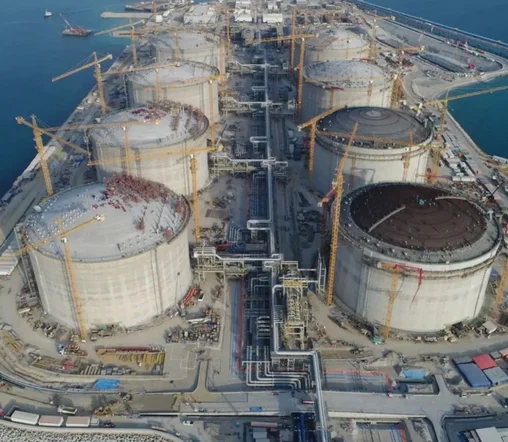
Three global firms vie for KIPIC gas project estimated at about $200 million

Kuwait Municipality approves AI and EV-charging business activities

Tenders agency to negotiate prices with two firms for Kuwait airport T2 operation contract